donate
Sponsor an animal for just $50 per year.
Adoption packages, corporate sponsorship, wills and bequests, or volunteer hours. Your donation helps Coffs Coast Wildlife Sanctuary continue rescuing, rehabilitating, and protecting local wildlife.
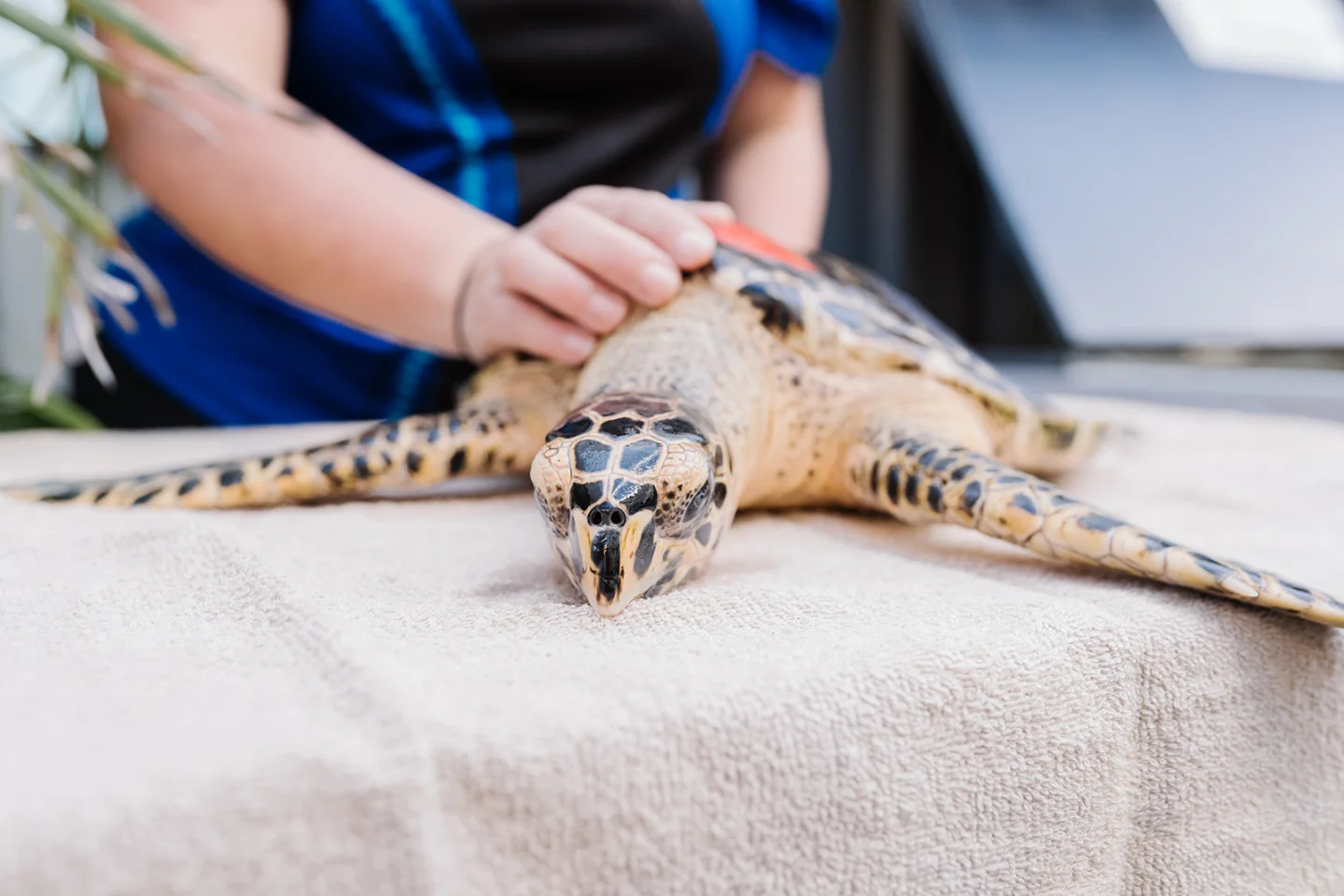
From stranded sea turtles to exhausted seabirds, every patient is assessed, stabilised and treated until it's ready to go back where it belongs. With H5 bird flu now on the Coffs Coast, every bird is tested on arrival to keep the rest of our patients safe.
Do NOT put back in the water. Call us, keep any pets or animals away and follow our instructions.
Call us on 02 6659 1900Keep it warm, dark and quiet. Don’t offer food or water. Call WIRES and follow their instructions.
Call WIRES on 1300 094 737Recovery takes time, and our team gives every animal as much as it needs.
Every animal gets a thorough check on arrival, including weight, temperature, hydration and injuries, so we can plan the right care from the start.
Treatment is tailored to each animal and can include fluids, pain relief, wound care and medication, with specialist veterinary care when it's needed.
Recovery happens in a quiet pool or pen, with feeding and movement monitored every day as the animal regains its strength.
When an animal is ready, it has a full health and fitness check, and we choose a release site that suits its habitat, the season and, for turtles, the water temperature.
The Coffs Coast's first detection of H5 avian influenza was confirmed in a bird at Corindi Beach. Do not approach or handle sick or dead birds, or mammals such as foxes. Keep dogs on a lead at the beach and report anything you find to the Emergency Animal Disease Hotline.
One case has been recorded at Corindi so far, detected after a member of the public reported a non-native bird. Twenty-two cases have now been confirmed across New South Wales, and well over 200 nationally — the vast majority in wild seabirds such as terns and petrels. There is no detection in poultry, and the risk to human health remains low.
For a wildlife rescue operation it changes almost everything about how a bird is received. Every seabird now has to be assessed and tested before it can come near the animals already in our care, which is why the Mobile Wildlife Emergency Unit is being fast-tracked into a registered triage facility with its own assessment gazebo.
Shearwaters return along this coast next month. Once H5 takes hold in a wild population there is no cure — only surveillance and containment — so our job is to keep the exhausted and the injured getting care without putting everything else at risk.
Saving as many of these birds as possible, because there may not be many returning to the island.
Disinfection stations are in place and being expanded, full PPE is required for handling any suspect bird, and we're working towards a separated marquee with clear green zones and isolation zones for testing and treatment.
For years, the first hour of a rescue has been spent driving. A seal on the rocks at Sawtell, a bird of prey on the Pacific Highway, a turtle tangled in fishing line off Mutton Bird Island: each one has had to be boxed, carried and driven before anyone could look at it properly.
The Mobile Wildlife Emergency Unit is built to change that. It's fitted out with oxygen, fluid warmers, a treatment bench, species-appropriate transport crates and a generator. Once it's fully operational, our team will be able to start care on the sand, in the bush or in a driveway, wherever the animal is.
The unit is ready to take animals now. The next step is funding the veterinary support and running costs to get it out on the road. It has been paid for entirely by visitors, adopters and donors. There's no government funding behind it, which is why every contribution counts.
Because the unit is mobile, it's designed to go where it's needed most in an emergency. It can be set up as a forward treatment point as close to a fire ground as is safe. There, burnt and smoke-affected wildlife can be assessed, given fluids and stabilised on site, rather than being driven for an hour while its condition worsens.
We'll always work to the directions of the RFS and NPWS and never enter an active fire ground. In practice, that means staging at an evacuation point or a safe access road, treating the animals brought to us and moving forward as areas are cleared. The same setup will support our response to storms, floods and oil spills.
Adoption packages, corporate sponsorship, wills and bequests, or volunteer hours. Your donation helps Coffs Coast Wildlife Sanctuary continue rescuing, rehabilitating, and protecting local wildlife.

The Coffs Coast Wildlife Sanctuary acknowledges the Gumbaynggirr people, traditional custodians of this land. We pay respect to the Elders, both past and present, of the Gumbaynggirr Nation and extend that respect to all Aboriginal and Torres Strait Islander peoples today.